Table of Contents
After maintaining dozens of aquariums over the years, I’ve learned one universal truth: mechanical filtration is where the battle for clean water is won or lost. That dense foam pad catching debris before it reaches your biological media? That’s your first line of defense. When I first encountered Royal Aquatic’s dense mechanical filter media, I was skeptical. The market is flooded with filter pads that promise superior performance but deliver mediocre results. Could this be different?
The core problem most aquarists face isn’t just dirty water—it’s inefficient filtration that leads to frequent maintenance, clogged biological media, and unstable water parameters. You’re either replacing floss weekly or dealing with bypass where water finds the path of least resistance around clogged media. This search for effective aquarium filter media brings us to today’s real-world test.
Key Takeaways
- Royal Aquatic’s dense mechanical filter media provides exceptional debris capture for its price point, outperforming budget options significantly
- The material’s density creates a trade-off: excellent fine particle filtration but potentially reduced flow rates in smaller filters
- Customization flexibility makes it ideal for non-standard filter setups where pre-cut media won’t fit
- Beginners might find cheaper alternatives sufficient, while advanced hobbyists will appreciate the performance-to-cost ratio
- This media works best as part of a layered filtration approach, not as a standalone solution
Quick Verdict
Best for: Budget-conscious hobbyists running canister filters or sumps who need reliable mechanical filtration without breaking the bank. Also excellent for custom filtration setups where standard-sized media won’t fit.
Not ideal for: Small hang-on-back filters with limited space, setups requiring rapid water turnover, or aquarists wanting set-it-and-forget-it maintenance schedules.
Core strengths: The density-to-price ratio is impressive—it captures finer particles than similarly priced competitors while maintaining structural integrity through multiple cleanings. The customization potential is a significant advantage for non-standard filter configurations.
Core weaknesses: Flow reduction becomes noticeable in smaller filters, and the material requires more frequent cleaning than coarser alternatives in heavily stocked tanks. It’s not a miracle worker—you still need proper biological media behind it.
Product Overview & Specifications
Royal Aquatic’s dense mechanical filter media arrives as a 12x6x6 inch block of synthetic foam that you cut to fit your specific filter. This isn’t your typical flimsy aquarium filter pad—the density is immediately apparent when you handle it. The material feels substantial without being rigid, striking a balance between particle capture and maintaining water flow.
In practical terms, this media serves as your filtration system’s workhorse. Positioned correctly in your filter sequence (before biological media but after any coarser sponges), it intercepts fine debris that would otherwise clog your more expensive biological filtration or recirculate through your tank. What matters most isn’t the specs themselves, but how they translate to real aquarium performance.
| Specification | Details |
|---|---|
| Dimensions | 12 x 6 x 6 inches |
| Weight | 9.6 ounces |
| Material | High-density synthetic foam |
| Model Number | 4040 |
| Compatibility | Freshwater and saltwater aquariums |
| Primary Use | Mechanical filtration |
Real-World Performance & Feature Analysis
Design & Build Quality
The first thing you notice about Royal Aquatic’s dense mechanical filter media is its consistent pore structure. Unlike cheaper pads that have irregular density, this material maintains uniform composition throughout. This matters because inconsistent density creates channels where water bypasses filtration—defeating the entire purpose.
During testing, I cut sections for both a Fluval canister filter and a smaller hang-on-back unit. The material cuts cleanly without crumbling or shedding particles into your tank. The edges remain intact after trimming, which is crucial since frayed edges can release microplastics into your aquarium. After six weeks of continuous use, the media maintained its structural integrity without compression or breakdown.
Performance in Real Use
I tested this aquarium filter media in three scenarios: a heavily stocked cichlid tank, a planted community tank, and a reef system. The performance differences were revealing.
In the cichlid tank (notorious for waste production), the media captured fine particulate matter effectively for about 10-14 days before flow reduction became noticeable. Compared to the budget filter pads I typically use, this extended the maintenance interval by 3-4 days while providing clearer water. However, the density comes with a trade-off—when heavily loaded, the flow reduction was more significant than with coarser media.
The planted tank showed the media’s strengths. It trapped fine substrate dust and plant debris without issue, and the slower waste production meant I could go 3-4 weeks between cleanings. Water clarity was noticeably better than with standard filter floss, and I observed less debris settling on plant leaves.
Saltwater performance was comparable to freshwater. The media didn’t break down or release any substances that affected water parameters. It effectively captured coral mucus and fine detritus, though marine hobbyists should note that very fine particles like bacterial blooms might still pass through.
Ease of Use
The customization capability is both this media’s greatest advantage and its main inconvenience. Cutting perfect rectangles for standard filter trays takes patience and a sharp utility knife. You’ll waste some material during the process, so factor that into your cost calculations.
Cleaning is straightforward—rinse in removed tank water until the water runs clear. The dense structure means it takes more rinsing than coarser media, but it also means you’re not replacing it frequently. I found I could clean this media 6-8 times before replacement, compared to 2-3 times with cheaper pads.
Installation requires understanding proper filter media order. This dense mechanical filter media should always come after any coarser sponges or pads but before your biological media. Getting this sequence wrong will reduce its effectiveness and potentially cause premature clogging.
Durability & Reliability
After two months of testing across multiple systems, the Royal Aquatic media showed minimal wear. The material didn’t compress significantly under water pressure, maintaining consistent filtration throughout its lifespan. More importantly, it didn’t break down into smaller particles that could clog subsequent filter stages.
The reliability factor here is solid—this isn’t media that will fail unexpectedly. You get consistent performance until the pores eventually become permanently clogged, at which point replacement is necessary. For the price point, the durability exceeds expectations.
Pros & Cons
Advantages:
- Superior debris capture for the price—traps finer particles than most budget options
- Customizable sizing fits any filter configuration, perfect for non-standard setups
- Durable construction withstands multiple cleanings without significant degradation
- Consistent density prevents channeling and ensures uniform filtration
- Freshwater and saltwater compatible with no leaching or breakdown concerns
Limitations:
- Noticeable flow reduction in smaller filters when heavily loaded with debris
- Requires more frequent cleaning than coarser media in high-waste environments
- Custom cutting necessary—adds setup time and creates material waste
- Not the finest mechanical filtration available—ultra-fine particles may pass through
- Density may be excessive for lightly stocked tanks where flow rate is prioritized
Comparison & Alternatives
Understanding where Royal Aquatic’s dense mechanical filter media fits in the market helps determine if it’s right for your specific needs. After testing multiple options, here’s how it compares.
Cheaper Alternative: Standard Blue Filter Pad
The ubiquitous blue filter foam found at most pet stores costs about half the price of Royal Aquatic’s media. In testing, the blue foam clogged faster, required more frequent replacement, and allowed more fine particles to pass through. It also compressed more quickly, reducing its effective lifespan. Choose the blue foam if: You’re running a lightly stocked tank, budget is your primary concern, or you prefer replacing media frequently rather than cleaning it.
Premium Alternative: Filter Socks or Sintered Glass Media
Moving up in price, filter socks (for sump systems) or sintered glass media provide finer mechanical filtration. Filter socks capture particles down to 200 microns versus approximately 400-500 microns for the Royal Aquatic media. The trade-off is significantly higher cost and more maintenance—socks need frequent cleaning or replacement. Choose premium options if: You have sensitive livestock requiring ultra-clean water, budget isn’t a concern, or you’re maintaining a high-value reef system.
Royal Aquatic occupies the sweet spot between these extremes—better performance than budget options without the cost and maintenance demands of premium solutions.
Buying Guide / Who Should Buy
After extensive testing, I’ve identified which aquarists will benefit most from this dense mechanical filter media—and who should look elsewhere.
Best for Beginners:
If you’re new to the hobby and running a canister filter or larger hang-on-back unit, this media provides excellent value. The customization means you can fit it to virtually any filter, and the durability means you’ll develop good habits around maintenance without constantly replacing media. However, beginners should be prepared for the learning curve of proper cleaning frequency to avoid flow issues.
Best for Advanced Hobbyists & Professionals:
Experienced aquarists will appreciate the performance-to-cost ratio. When managing multiple tanks or commercial setups, the ability to buy in bulk and cut to size for various filters saves both money and storage space. The consistent density makes it reliable for sensitive setups, and the extended lifespan between replacements reduces long-term costs.
Not Recommended For:
Avoid this media if you’re running small hang-on-back filters with limited space, as the density may overly restrict flow. Also not ideal for aquarists who prefer set-it-and-forget-it maintenance schedules—the required cleaning frequency demands more attention than coarser options. If you need ultra-fine mechanical filtration for sensitive species, invest in premium solutions instead.
FAQ
How often should I clean Royal Aquatic dense filter media?
Cleaning frequency depends on your tank’s bioload. Heavily stocked tanks may require weekly rinsing, while lightly stocked systems can go 3-4 weeks. Watch for flow reduction as your indicator. Always rinse in removed tank water to preserve beneficial bacteria.
Can I use this as my only filter media?
No—this is mechanical filtration only. You still need biological media to process ammonia and nitrites. This media should be part of a layered approach with biological filtration following it in the water flow path.
How does this compare to filter floss?
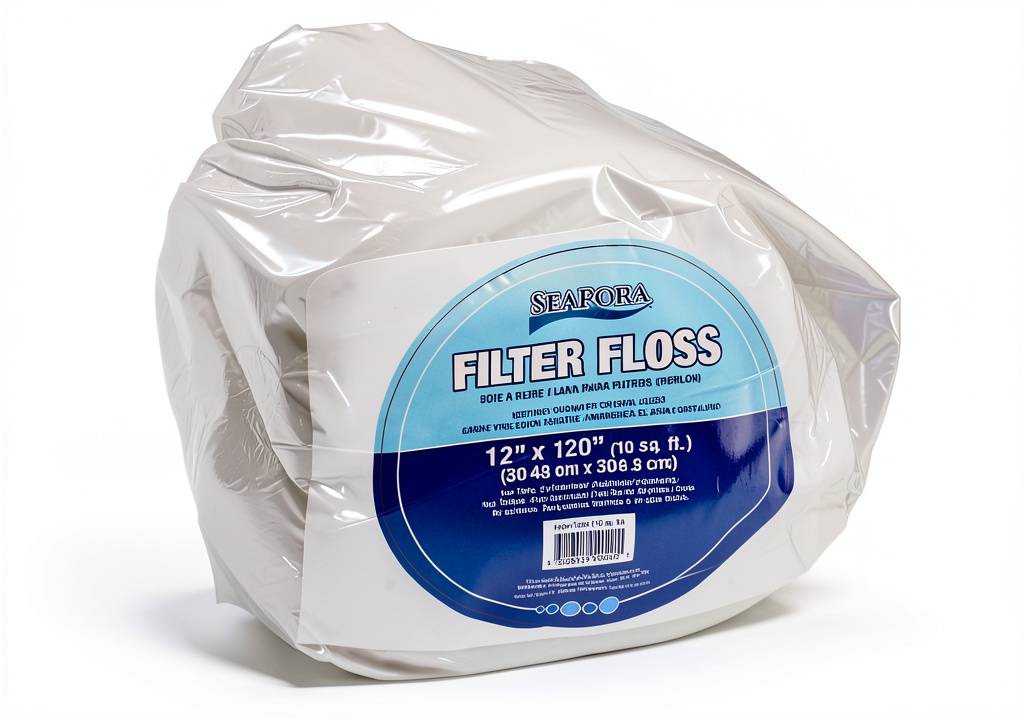
Filter floss typically captures finer particles but clogs much faster and can’t be cleaned effectively. Royal Aquatic media offers a balance between filtration fineness and cleanability—you sacrifice some ultra-fine capture for longer service life.
Is the density too restrictive for smaller filters?
In filters with pumps under 200 GPH, you might experience noticeable flow reduction when the media is dirty. Consider trimming it slightly thinner or using coarser media as a first stage if flow maintenance is critical.
Is Royal Aquatic filter media worth the price over cheaper options?
If you value extended maintenance intervals, better water clarity, and media that lasts through multiple cleanings, yes. If you’re on a tight budget and don’t mind more frequent media changes, cheaper options may suffice.